

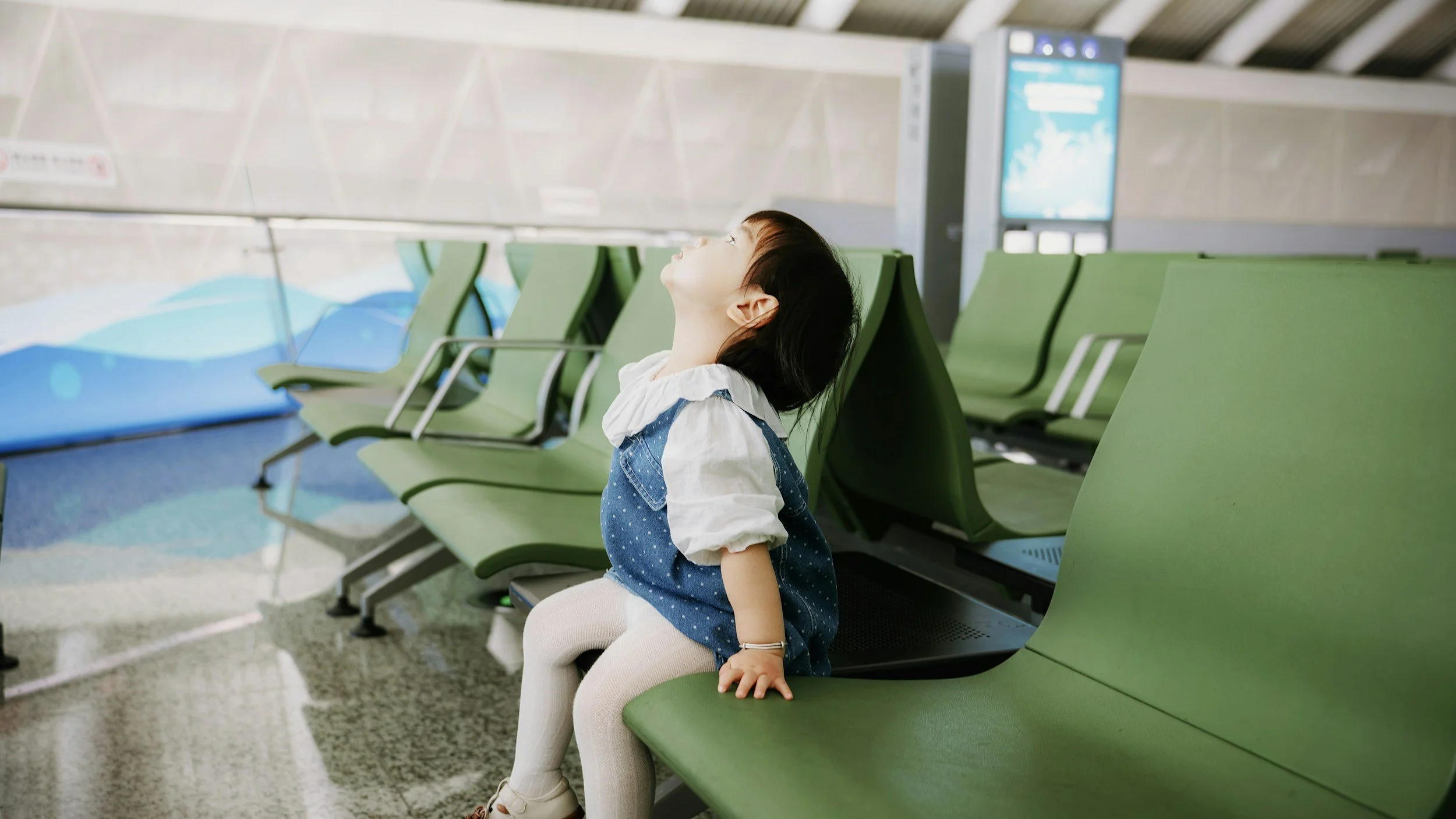
A child is kneeling on their chair, tapping a pencil, or shifting from one foot to the other.
The natural assumption is that they are not paying attention.
Sometimes that is true. But movement does not always mean a child is mentally somewhere else. In some cases, movement is one of the ways a child helps their body stay alert, organized, and available for the task.
The more useful question is not simply, “Can my child sit still?”
It is: “What helps my child participate?”
Attention Has a Physical Component
Attention is often treated as a purely mental skill, but the body plays an important role.
Before a child can listen to a story, complete a worksheet, or participate in a meal, they need to reach a workable level of alertness. A child who feels sluggish may seek movement to wake up. A child who feels restless may need physical activity before settling into a quieter task.
Postural control matters too. Sitting upright requires the trunk to stabilize the body against gravity. If this takes significant effort, the child may lean on the table, wrap their feet around the chair, prop up their head, or change positions frequently.
From the outside, these behaviors may look inattentive. Internally, the child may be trying to make sitting more manageable.
Stillness Can Hide the Real Problem
A child can sit completely still without absorbing what is being said. Another child may move throughout an activity and remember every detail.
That is why stillness should not be the only measure of attention.
Instead, notice whether the child can:
respond to relevant questions
follow the direction
return to the task after a distraction
remember the main information
use materials safely
complete a reasonable amount of work
remain involved without disrupting others
These observations give a clearer picture of participation than body position alone.
This does not mean every form of movement is helpful. Movement that pulls the child away from the activity, interferes with other people, or creates a safety concern needs to be addressed. The goal is to distinguish movement that supports participation from movement that replaces it.
Why Some Children Seek Movement
Movement provides strong information to the body. Pushing, pulling, climbing, bouncing, and changing position can influence how alert and organized a child feels.
Some children naturally seek more of this input. During seated activities, they may:
rock in the chair
chew on pencils or clothing
tap their feet
stand instead of sit
press heavily on the table
get up repeatedly
look for reasons to carry or move objects
These behaviors are not automatically signs of defiance. They may be attempts to meet a physical need during an activity that asks the body to remain quiet.
The timing also matters. A child may sit comfortably at breakfast but struggle after a long school day. They may participate during a brief lesson but lose organization during a prolonged worksheet. They may focus well after recess and have much more difficulty when movement has been limited.
Patterns tell us more than isolated moments.
The Environment Can Increase the Demand
A child’s ability to be attentive can change depending on where the activity takes place.
A classroom may include conversations, scraping chairs, visual displays, movement in the hallway, and several directions given in quick succession. At home, homework may happen near siblings, television, kitchen activity, or tempting toys.
Some children can filter this background information without much effort. Others use so much energy managing the environment that less remains for the actual task.
Seating can create another challenge. A chair that is too large may leave the child’s feet unsupported. A desk that is too high may make it harder to use the arms efficiently. Even a motivated child may move constantly when the setup does not provide enough stability.
Before assuming the child needs more reminders, it is worth looking at what their body and surroundings are asking them to manage.
Support Movement Without Losing the Task
The answer is not necessarily to allow unlimited movement or remove every expectation to sit. Children need to participate in classrooms, meals, transportation, and other situations in which movement may be limited.
The goal is to make movement purposeful.
Helpful options might include:
completing a brief movement activity before sitting
allowing the child to stand at an appropriate workspace
providing a chair and table that fit their body
using foot support when the feet do not reach the floor
breaking longer tasks into manageable sections
offering short, predictable movement breaks
giving the child a job that involves safely carrying or pushing
allowing a quiet hand tool if it improves rather than interrupts attention
A sensory tool is only useful if it supports the activity. If a fidget becomes the child’s main focus or distracts nearby classmates, it is not serving its intended purpose.
The same strategy will not work for every child. One child may become more organized after active movement, while another becomes increasingly excited and has difficulty slowing down. Support should be based on the child’s actual response.
Look at What Happens After Movement
Parents and teachers can learn a great deal by observing cause and effect.
After jumping, climbing, or pushing something heavy:
Does the child settle more easily?
Can they listen for longer?
Is their body calmer or more activated?
Does written work become more organized?
Are transitions easier?
How long does the effect last?
Also consider what type of movement the child chooses independently. A child who constantly runs may be looking for a different experience from a child who presses into furniture or wants to carry heavy objects.
These observations help move the conversation beyond “They need to get their energy out.” They provide specific information about what may help the child prepare for participation.
When Attention Concerns Deserve a Closer Look
Movement and variable attention are normal parts of childhood. A child does not need to remain perfectly still to learn.
Additional support may be helpful when the child’s movement or difficulty sustaining attention consistently interferes with:
classroom learning
family meals
homework
group activities
friendships
safety
the child’s confidence
It is also worth looking more closely when sitting appears physically exhausting, the child frequently falls from the chair, avoids tabletop activities, or needs much more movement than peers to remain involved.
An occupational therapy evaluation can consider posture, body awareness, sensory processing, motor coordination, and the demands of the environment. The purpose is not to eliminate movement. It is to understand what the movement is accomplishing and help the child find effective ways to stay engaged.
At TheraPlay LA, we look beyond whether a child appears still. We consider whether their body is supported, whether the environment is manageable, and whether they can meaningfully participate.
Because a quiet body does not always indicate an attentive mind and a moving body does not always mean a child is not listening.
