

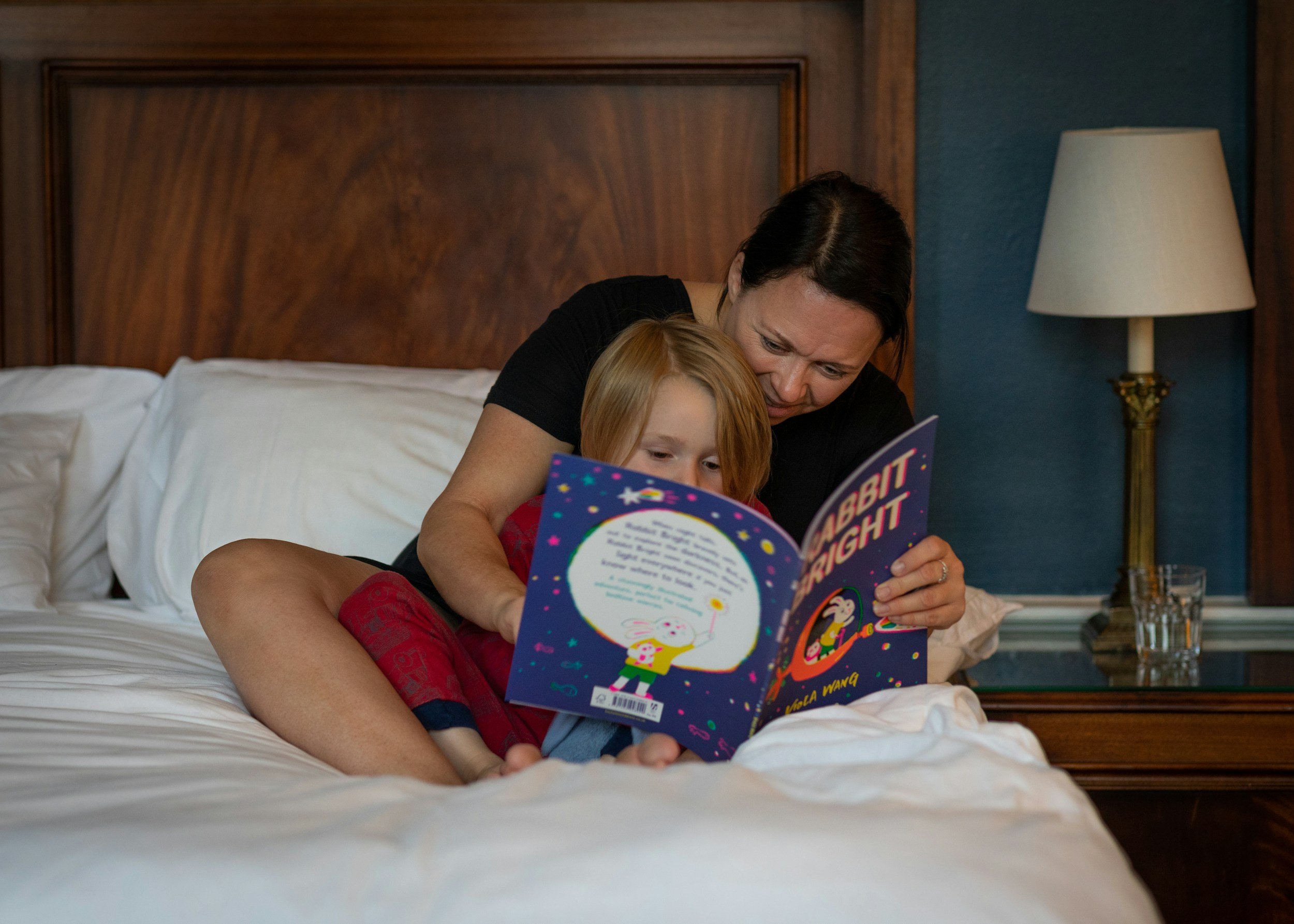
Your child goes to bed at eight and wakes up at seven.
They are not calling for you throughout the night. They are not wandering into your room. As far as you know, they slept for eleven uninterrupted hours.
But mornings are still difficult.
Your child wakes up irritable, takes a long time to get moving, or seems tired before the day has really begun. Later, they may become unusually active, emotional, distracted, or dependent on movement to stay engaged.
When the number of hours looks appropriate, it is natural to assume sleep cannot be the issue. But time spent asleep and the quality of that sleep are not the same thing.
A child can remain in bed all night while their body struggles to reach or maintain restorative sleep.
Sleep Quantity Is Only Part of the Picture
Sleep is not one uniform state. The brain and body move through different stages, each supporting important functions such as memory, learning, physical recovery, immune function, and emotional regulation.
For sleep to be restorative, the child needs more than an adequate schedule. Their body also needs to move through these stages without being repeatedly interrupted.
Some interruptions are obvious. The child wakes up, calls for a parent, uses the bathroom, or has difficulty returning to sleep.
Others are brief enough that neither the child nor parent remembers them. The child may partially wake, reposition the body, breathe more deeply, or move into a lighter stage of sleep before settling again.
If this happens repeatedly, the child may technically remain asleep for many hours without receiving the full benefit of those hours.
What Restless Sleep Can Look Like
Children naturally move during sleep, and changing position occasionally is not automatically concerning.
The pattern becomes more meaningful when movement is frequent, intense, or appears alongside other signs.
Parents may notice that their child:
Snores regularly
Breathes loudly
Sleeps with an open mouth
Sleeps with the neck extended
Props the body into unusual positions
Travels across the entire bed
Wakes with very messy sheets despite staying in bed
Becomes tangled in the blankets
Repeatedly kicks or moves the legs
Sweats heavily
Grinds the teeth
Drools excessively
Sometimes the child’s sleeping position provides useful information. A child may extend the neck, elevate the upper body, or choose another posture because it feels easier or more comfortable.
The position itself does not reveal the cause, but it is worth mentioning when discussing sleep with a provider.
Morning Behavior Offers Important Clues
The first part of the day can tell parents a great deal about the previous night.
A well-rested child will not necessarily leap out of bed cheerfully every morning. Children have different temperaments, schedules, and natural sleep preferences.
However, a repeated pattern of difficult mornings may deserve attention.
Notice whether your child:
Is extremely difficult to wake
Seems physically exhausted despite an adequate bedtime
Needs a long time to become alert
Is unusually irritable
Asks to return to sleep
Appears confused or disoriented
Complains of a headache
Wakes with a dry mouth
Has noticeable bad breath
It can also help to compare mornings. Does your child function differently after a visibly restless night? Are weekdays and weekends noticeably different? Does sleeping longer actually improve their energy, or do they remain tired regardless?
These patterns provide more information than bedtime and wake time alone.
Poor Sleep May Look Different During the Day
Not every tired child appears sleepy.
Some children become quiet, slow, and disengaged. They may fall asleep in the car, need naps beyond the age parents expect, or struggle to sustain activity.
Other children become increasingly active.
They may run, climb, talk constantly, seek strong movement, or appear unable to slow their body. Their behavior can look like endless energy when they may actually be working hard to remain alert.
Poor-quality sleep may also contribute to:
Falling apart late in the day
Emotional reactions that seem unusually intense
Difficulty recovering from small disappointments
Reduced frustration tolerance
Inconsistent attention
Reduced endurance for schoolwork
Difficulty following multistep directions
Greater sensitivity to sound, touch, or movement
None of these behaviors proves that a child has a sleep disorder. Each can have many possible explanations.
Their value lies in the pattern. When daytime regulation concerns appear alongside snoring, mouth breathing, restlessness, difficult waking, or other nighttime signs, sleep deserves a closer look.
Breathing Can Interrupt Sleep Without Fully Waking the Child
During sleep, the muscles of the body relax. If airflow through the nose or throat is limited, the body may need to work harder to maintain comfortable breathing.
Possible contributors include congestion, allergies, enlarged tonsils or adenoids, differences in airway structure, and oral or breathing patterns that need further evaluation.
A child may respond by opening the mouth, changing position, briefly shifting into lighter sleep, or partially waking without becoming fully alert.
Parents may never hear the child call out. From outside the room, the night can appear uninterrupted.
This is why regular snoring should not be dismissed simply because the child seems to “sleep through it.” Snoring is a sound created by airflow meeting resistance. It does not tell us exactly what is causing that resistance, but persistent snoring is appropriate to discuss with a medical provider.
Pauses in breathing, gasping, choking, or visible difficulty breathing should be evaluated promptly.
“They Have Always Slept Like This”
Long-standing sleep patterns can begin to feel normal.
A child may have always moved throughout the night, needed an unusually long time to wake, or slept with an open mouth. Families adapt because the pattern is familiar and because every household develops ways to function around sleep.
But familiar does not necessarily mean restorative.
Parents do not need to panic over every movement or difficult morning. They also do not have to wait for a dramatic event before asking whether something more may be contributing.
The question is not whether the child has ever had a good night. It is whether the overall pattern supports comfortable, consistent rest.
Observe Before You Try to Fix
When parents become concerned about sleep, there is a temptation to change everything at once: bedtime, bedding, food, lighting, routines, supplements, and behavioral expectations.
Before making multiple changes, spend several nights observing.
A simple sleep log might include:
Bedtime
Approximate time the child falls asleep
Snoring or noisy breathing
Open- or closed-mouth posture
Restlessness
Unusual positions
Awakenings you notice
Wake time
Morning mood
Daytime energy and regulation
If possible, quietly observe your child at different points during the night rather than only after they first fall asleep.
A short recording of concerning breathing may also help a qualified provider understand what you are seeing, provided your child’s privacy is protected.
Specific observations are more useful than a general statement that the child is “a terrible sleeper” or “always tired.”
When to Bring Sleep Into the Conversation
Talk with your child’s pediatrician or another qualified medical provider when poor-quality sleep is persistent or when you notice regular:
Gasping or pauses
Significant difficulty waking
Major changes in daytime behavior or regulation
Daytime sleepiness
Repeated waking
Restless sleep
Snoring
Open-mouth breathing
Heavy sweating
Depending on the concern, the child may be referred to an ENT, sleep physician, or another appropriate specialist.
Occupational therapy does not diagnose sleep apnea or replace a medical airway evaluation. It can contribute a functional perspective by examining regulation, sensory processing, oral awareness, bedtime participation, and how poor sleep may be affecting daily activities.
At TheraPlay LA, we encourage families to look beyond the number on the clock. A child may be spending enough time in bed while their body is still working too hard overnight.
The real measure of sleep is not only how long it lasted.
It is whether the child wakes with the resources to participate in the day ahead.
