

Why More Handwriting Practice Isn't Always the Answer
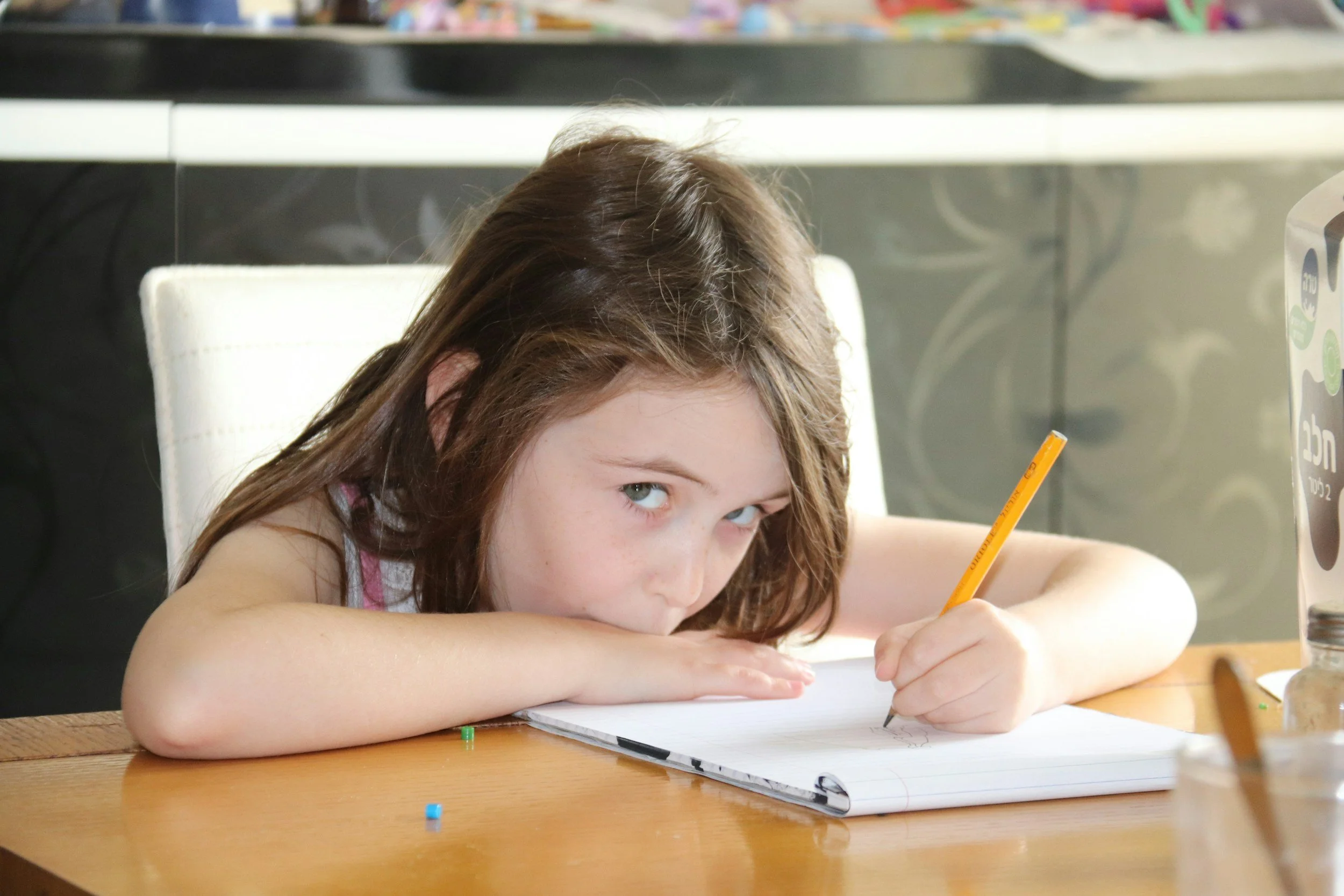
When a child struggles with handwriting, the most obvious solution is often:
Practice more handwriting.
Sometimes more practice is helpful. Children need opportunities to learn letter formation, develop fluency, and become comfortable expressing ideas on paper.
But handwriting is not simply a finger skill. Before a pencil produces a letter, the child’s body and brain must organize posture, vision, movement, attention, and sensory information. If one part of that system is working especially hard, another page of tracing may not address the actual reason writing is difficult.
Handwriting Begins With the Whole Body
Efficient handwriting depends on a stable foundation.
The trunk keeps the body upright. The shoulder positions and controls the arm. The wrist provides stability while allowing the fingers to move the pencil. The opposite hand holds and adjusts the paper. The eyes guide the pencil while the brain manages letter direction, spacing, size, pressure, and sequence.
Handwriting draws on several abilities at once, including:
postural control
shoulder and wrist stability
bilateral coordination
visual-motor integration
fine-motor control
motor planning
awareness of pressure and force
attention and working memory
The pencil is where parents and teachers see the difficulty, but it is not necessarily where the difficulty begins.
Why Posture Matters
Imagine trying to write neatly while sitting on an unstable chair. You could probably still do it, but some of your attention would be devoted to keeping yourself balanced. Writing would require more effort, and you might tire quickly.
Some children have a similar experience at the table. If maintaining an upright position is demanding, they have fewer resources available for controlling the pencil.
Parents may notice a child leaning heavily on the desk, wrapping their feet around the chair legs, resting their head on one hand, constantly changing position, or sliding forward in the seat. The child may begin with readable handwriting but lose control as the task continues.
This does not necessarily mean the child is careless or unmotivated. Their body may be working hard before the writing task has truly begun.
Each Hand Has a Different Job
Handwriting is also a two-handed activity.
The writing hand controls the pencil, while the other hand stabilizes and repositions the paper. This allows the writing hand to move smoothly across the page without the body constantly shifting.
When bilateral coordination is still developing, a child may forget to hold the paper, switch hands frequently, rotate the page excessively, or use the writing arm to keep the paper from moving. Writing may become slower because the child is trying to manage several physical demands at once.
This is one reason activities such as cutting, opening containers, building, cooking, and stringing beads can support skills used during handwriting. They teach the hands to perform different but coordinated roles.
Vision and Movement Must Work Together
Children need more than clear eyesight to write successfully.
Visual-motor integration allows the eyes and hands to work together. It helps a child copy shapes, place letters on a line, judge spacing, and reproduce what they see on the board or another page.
A child may recognize every letter but struggle to recreate it accurately. They may reverse letters, crowd words together, drift above or below the line, or have difficulty copying from a nearby or distant example.
Visual attention also matters. The child must find the correct place on the page, keep track of where they are, and return to the right location after looking away. A busy worksheet can make this much harder.
These challenges may become more noticeable as schoolwork requires children to write smaller, faster, and for longer periods.
Pencil Pressure Provides Useful Clues
Some children press so lightly that their writing is difficult to see. Others press hard enough to break pencil tips, tear the paper, or leave deep marks on the next page.
This may relate to hand strength, fatigue, pencil grasp, or difficulty judging force. It can also reflect how clearly the child senses feedback from the hand and pencil.
Simply reminding a child to “press harder” or “lighten up” may work briefly, but the child may not yet have an automatic sense of how much pressure is appropriate. Activities involving resistance such as kneading dough, squeezing putty, using tongs, or drawing on textured surfaces can provide stronger feedback and help children explore controlled force through play.
What Parents May Notice
Handwriting challenges do not look the same for every child. You might notice that your child:
avoids drawing, coloring, or written homework
complains that their hand hurts or becomes tired
writes very slowly
uses unusually heavy or light pressure
struggles to keep letters on the line
has inconsistent letter size or spacing
changes pencil grasp repeatedly
leans heavily on the table
forgets to stabilize the paper
understands the assignment but produces very little written work
becomes frustrated when copying
writes legibly at first but loses control over time
One sign by itself does not identify a specific problem. The pattern is more important.
Consider when the difficulty appears, how much effort the task requires, and whether it interferes with school participation or confidence. A child who can form letters carefully but cannot keep up with classroom work may have a different need from a child who does not yet know how to plan the movements for each letter.
Helpful Activities May Not Look Like Writing
Children should practice writing, but pencil-and-paper work does not need to be the only form of support.
Activities that strengthen the foundation for handwriting include:
climbing, crawling, and wheelbarrow walks for upper-body stability
drawing on an easel or paper taped to a wall
rolling, pinching, and shaping dough or putty
cutting, folding, and tearing paper for crafts
building with small blocks or connecting toys
using tweezers or tongs to move small objects
completing mazes and dot-to-dot pictures
helping with mixing, pouring, opening, and spreading during cooking
These activities support coordination, precision, endurance, and controlled force without making every interaction feel like handwriting homework.
The activity should be matched to the child. If the task is too difficult, repeated frustration is unlikely to build skill or confidence.
Make Writing Practice More Effective
When children do practice handwriting, shorter and more focused sessions are often more productive than completing a large amount of work after fatigue has set in.
It may help to:
check that the chair and table fit the child
provide foot support if the child’s feet do not reach the floor
reduce visual clutter on the page
practice a small group of letters with similar movement patterns
use paper with clear visual boundaries
allow brief movement breaks
separate handwriting practice from longer composition tasks
stop before pain or significant frustration develops
The goal is not to eliminate effort. Learning requires effort. The goal is to make sure the child is practicing the intended skill rather than spending most of their energy trying to remain seated, stabilize the page, or tolerate discomfort.
When Occupational Therapy May Help
Handwriting develops over time, and occasional reversals, inconsistent sizing, or an awkward grasp can be part of normal learning. An occupational therapy evaluation may be helpful when handwriting difficulties persist, create distress, or interfere with a child’s ability to participate at school.
Support may be worth considering if your child regularly:
avoids age-appropriate writing and drawing
experiences pain or significant fatigue
falls behind because writing takes so long
struggles to copy letters or shapes
produces work that is difficult to read despite instruction
becomes upset during written assignments
has difficulty with other fine-motor or self-care tasks
knows what they want to say but cannot get it onto paper efficiently
An occupational therapist can look at the full system supporting handwriting, including posture, strength, coordination, visual-motor skills, pencil control, motor planning, and sensory processing. This helps determine whether the child needs direct handwriting instruction, support for an underlying skill, changes to the environment, or a combination of approaches.
At TheraPlay LA, the goal is not simply to make handwriting look neater. We want to understand what makes writing difficult for the individual child and help them participate with greater comfort, confidence, and independence.
Sometimes improving handwriting does involve picking up the pencil.
And sometimes the most useful first step is putting it down and strengthening everything that supports it.
