

Why Play Is More Developmentally Complex Than It Looks
A child building a fort appears to be playing.
A child running a pretend restaurant appears to be playing.
A child stacking blocks appears to be playing.
All of those statements are true but they are incomplete.
Play is enjoyable and voluntary, but it is not developmentally empty. A single play experience can place demands on sensory processing, movement, language, problem-solving, emotional regulation, and social interaction.
A pretend doctor’s office, for example, may ask a child to tolerate unfamiliar costume textures, fasten clothing, turn ordinary objects into medical tools, organize a story, remember different roles, and respond when another child changes the plan.
To the child, it is simply a game. Underneath the game, many developmental systems are working together.
Play Brings Separate Skills Together
Adults often divide development into categories: motor skills, language skills, social skills, sensory processing, and executive functioning. Children do not experience these skills as separate subjects.
During play, they are naturally combined.
Building a fort may require a child to move furniture, carry cushions, judge whether a blanket will reach, explain an idea, negotiate with a sibling, and revise the structure when part of it collapses. Success depends on much more than the child’s ability to stack materials.
This is one reason play can reveal things that are harder to see during a highly structured task. A child may demonstrate a skill when an adult tells them exactly what to do, but have difficulty deciding how to use that skill independently. Another child may understand the goal but struggle when the materials do not behave as expected.
Play shows us not only what a child knows, but how they organize themselves when there is no single correct answer.
Pretend Play Is Serious Cognitive Work
Imagine two children playing restaurant.
They decide who will cook and who will order. They create a menu. A block becomes a phone. Toy food is arranged on plates. One child announces that the restaurant is closing, while the other wants to keep serving customers.
Now they have a problem to solve.
Within this short interaction, the children may be using:
symbolic thinking
planning and sequencing
memory
expressive and receptive language
perspective-taking
negotiation
flexible thinking
emotional regulation
Pretend play asks children to hold an idea in mind while coordinating it with someone else’s ideas. The storyline is constantly changing, so the children must listen, respond, and adjust.
A child who struggles with flexible thinking may become upset when someone changes the story. A child with language difficulties may have a clear idea but struggle to communicate it. A child who is unsure how to enter the game may watch from nearby without joining.
These moments provide meaningful information. They show which parts of shared play are comfortable and which require more support.
Block Play Creates Its Own Challenges
Blocks offer a different kind of developmental experience.
A child building a tower must judge where each piece belongs, control how much force to use, coordinate both hands, and understand relationships such as above, below, beside, and between.
When the tower falls, the child receives immediate feedback. They can abandon the idea, repeat the same approach, or change the plan.
The process becomes:
Plan → Try → Notice → Adjust
The collapse is not necessarily a failed activity. It may be the moment that asks the child to tolerate disappointment, examine what happened, and create a new solution.
Building alongside another child adds further demands. The children may need to share materials, combine different ideas, divide responsibilities, and decide what to do when they disagree.
Adults do not need to turn this into a lesson about engineering. The structure of the activity already creates opportunities for experimentation and problem-solving.
Sensory Play Adds Information Through the Body
Water, sand, dough, rice, foam, and paint give children information about texture, temperature, resistance, pressure, and movement.
A child squeezing dough learns how the material responds to force. Pouring water between containers requires visual attention and controlled movement. Searching for small objects in sand asks the hands to explore without relying only on vision.
Add scoops, tongs, cups, hidden objects, or another child, and the activity can also involve:
fine-motor control
two-handed coordination
visual tracking
measuring and comparing
memory
language
turn-taking
Children respond differently to sensory materials. One child may immediately immerse both hands, while another watches cautiously or uses a tool to avoid direct contact. The goal is not to force participation or insist that every child enjoy every texture.
A hesitant child might begin with a spoon, touch the material with one finger, or play beside the container before moving closer. Gradual, respectful exposure is more useful than turning sensory play into a test of tolerance.
Movement Play Builds More Than Strength
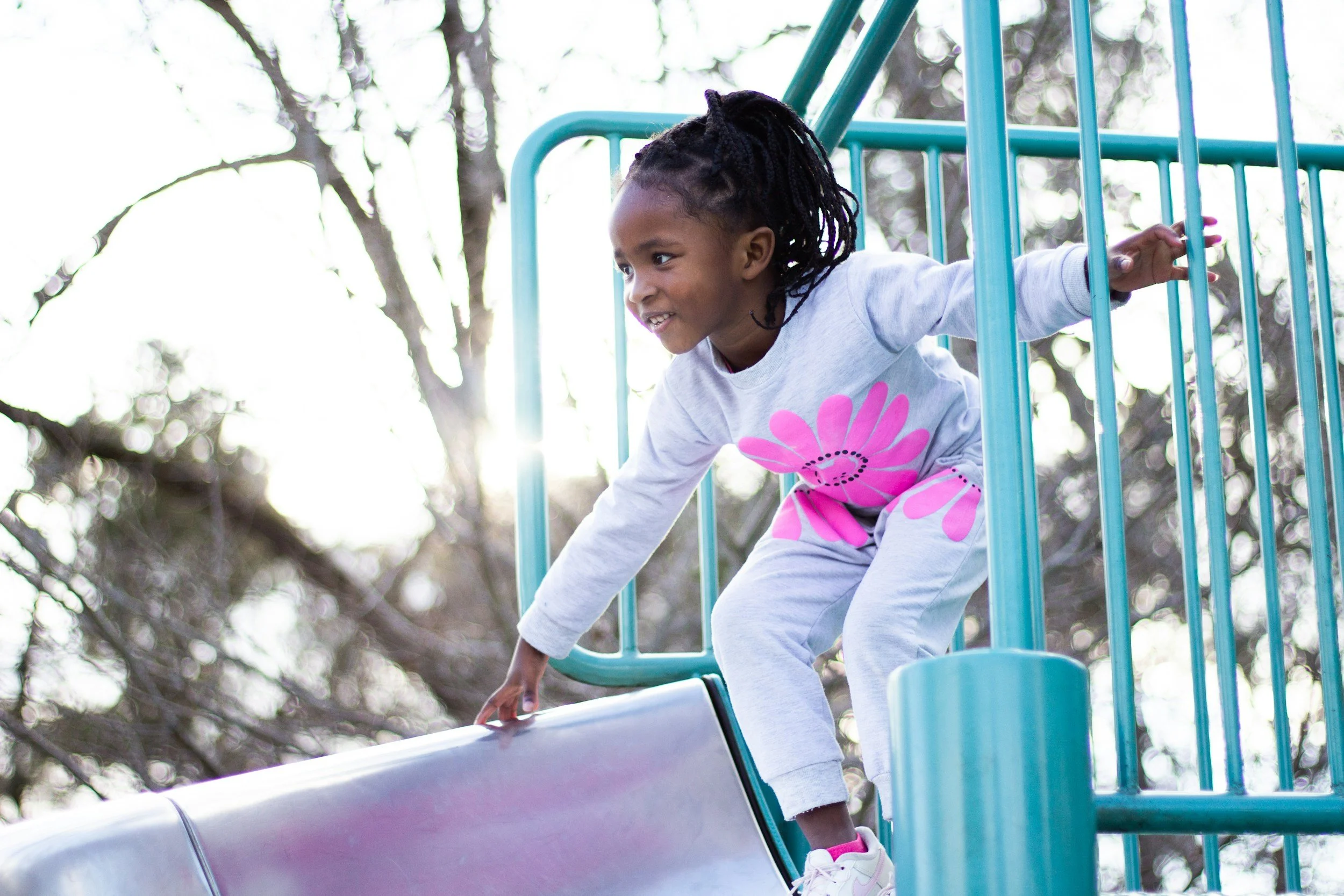
Running, climbing, swinging, jumping, and rough-and-tumble play give children experience with balance, body awareness, timing, and force.
Movement play also requires judgment. A child climbing a structure has to decide where to place a foot, how far to reach, and whether the body feels secure enough to continue. A game of tag adds changing directions, awareness of other people, impulse control, and quick problem-solving.
Movement can also affect how alert and organized a child feels. Some children become more focused after climbing or pushing. Others can become overly excited and need help slowing down afterward.
Observing these differences can help parents understand the kinds of movement their child seeks, avoids, or uses to regulate.
Open-Ended Play Allows the Child to Create the Plan
Adult-led activities have value. Games with rules can teach turn-taking, following directions, and handling predictable limits. Crafts can introduce new tools and techniques.
Open-ended play offers something different: the child has to generate the idea.
There is no model showing exactly what to build, no single correct use for the materials, and no adult determining every step. The child decides what the object represents, what should happen next, and when the plan needs to change.
This can be difficult for children who rely heavily on models or adult direction. They may repeatedly ask, “What should I make?” or say “I don’t know” for someone else to begin.
Instead of immediately providing the entire idea, parents can offer a small entry point:
“I wonder what we could build with these boxes.”
“Where do you think the animals should live?”
“What does your restaurant need?”
“That didn’t work the way you expected. What could you try?”
The goal is to support the child’s thinking without taking ownership of the game.
Parents Do Not Need to Turn Play Into Therapy
You do not need to narrate every skill your child is developing. You do not need to correct every movement, organize every storyline, or make each activity educational.
In fact, too much adult direction can remove some of the thinking that makes play valuable.
Parents can support rich play by:
offering a few versatile materials
allowing enough time for an idea to develop
following the child’s interests
joining without controlling the story
resisting the urge to fix every problem immediately
helping only as much as the child needs
allowing safe mess, movement, and experimentation
A cardboard box can become a boat, store, animal home, or spaceship. Fabric can become a costume, river, roof, or picnic blanket. The simpler the material, the more thinking the child may contribute.
Boredom can even be part of this process. A child who does not receive an immediate activity may eventually invent one. That period of uncertainty can create space for initiative and imagination.
When Play Feels Unusually Difficult
Children have different interests and play styles. Not every child enjoys pretend play, messy materials, blocks, or highly active games.
A closer look may be helpful, however, when a child consistently:
repeats the same play sequence without variation
becomes very upset when another child changes the game
abandons activities as soon as a problem occurs
has difficulty generating play ideas
wants to join peers but does not know how
avoids movement or hands-on exploration
struggles to manipulate common toys and materials
depends on an adult to organize and maintain play
becomes overwhelmed by ordinary sounds, textures, or movement
An occupational therapy evaluation can explore whether sensory processing, motor planning, coordination, regulation, attention, or executive functioning is affecting the child’s ability to participate.
At TheraPlay LA, play is not treated as a reward after the “real work.” It provides a meaningful setting in which children can develop skills, experiment with new strategies, and participate in something they genuinely care about.
The most productive play does not always look impressive. It may look like a fallen tower, an invented menu, a muddy bucket, or a living room covered in cushions.
To the child, it is play.
